
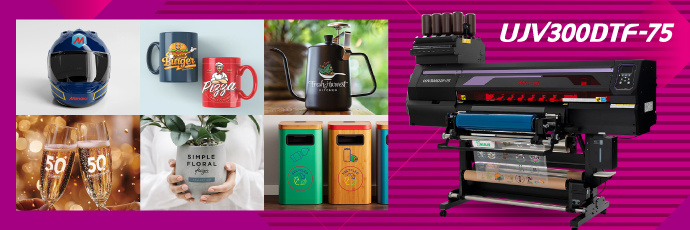
Have you ever held your breath while direct‑printing on expensive items or one‑of‑a‑kind goods, fearing even the slightest color shift or faint patch? For those facing this challenge, we highly recommend Mimaki's UV-DTF printer, the "UJV300DTF-75"!
Shift from risky "one-shot" direct printing to low-risk "transfer" printing.
Mimaki's UV-DTF minimizes production loss and drives a high-value-added business.
UV-DTF (UV-Direct to Film) printing is a decorative processing method that allows you to preview the final result on film before transferring it to the material. This process dramatically reduces production loss and turns high‑value jobs—previously too risky to accept—into a major source of revenue.
Furthermore, it overcomes the challenges posed by materials such as PP, PE, and glass—as well as complex curved surfaces—which were difficult to achieve adhesion on using conventional UV printing. There is no need for jig production costs or waiting time.
Achieve customization from a single unit with Mimaki's exceptional image quality and stability.
UV‑DTF will redefine what's possible in your decoration business.

Are worries about misprints or long setup times holding you back from taking on new jobs?
CASE 1: Fear of production loss
A minor color shift or faint ink patch on PCs, tablets, luxury fountain pens, or complex electronic devices can result in losses of tens of thousands of yen in an instant.
CASE 2: Adhesion challenges
PP, PE, glass, ceramics—direct printing often fails to adhere, peeling with daily use or cleaning with detergents.
CASE 3: Shape & size limitations
Direct printing projects you gave up on due to shape or size constraints—such as helmets and balls that cannot fit inside a printer, textured objects, or already installed walls, doors, and furniture.
CASE 4: Jig costs and delivery times
Waiting weeks and spending tens of thousands of yen to fabricate jigs (alignment fixtures) for just a few prototypes. Projects you had to pass on because small‑lot orders would not yield enough profit.
CASE 5: Inventory vs. deadline dilemma
You cannot print until the actual products arrive. Holding inventory consumes valuable space, but not doing so risks missed deadlines. You are trapped in a constant dilemma.
UV-DTF (UV-Direct to Film) technology redefines the standards of the decoration business.
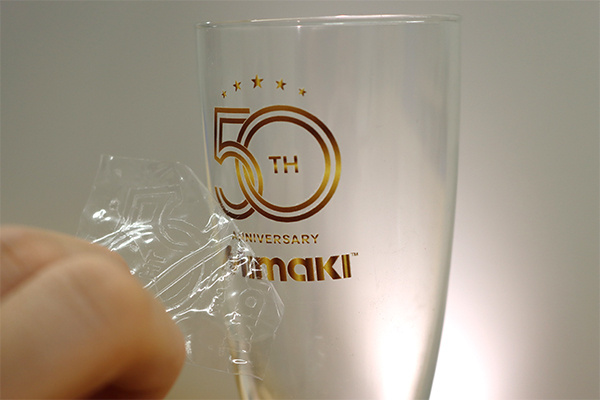
UV-DTF is a method where you print onto a specialized film, check the finished result, and then transfer it to the material.
Because you are not printing directly onto the material, there is no risk of "discarding expensive products" due to printing errors.
Freeing you from the pressure of a one-shot challenge, it powerfully backs your venture into "customer-supplied items" and "high-end products" that were previously too risky to handle.
1. Risk reduction: Suppressing the occurrence of "material loss" due to printing errors
Since only films that have been pre-checked for print quality are applied to the product, there are no failures like those in one-shot direct printing. You can confidently accept orders for expensive materials or one-of-a-kind items that you used to avoid.
2. Adaptable to versatile materials and shapes: Covers made from PP, PE, glass, and ceramics, to textured and curved surfaces, and even walls.
It supports materials that have adhesion difficulties with direct printing—such as PP, PE, glass, and ceramics—as well as uneven or curved surfaces, items too large to fit in a printer, and even walls that are already installed. Boasting excellent weather resistance comparable to outdoor signage, it delivers robust adhesion that withstands daily use and cleaning with detergents.
3. Streamlined process: No jigs required, cutting weeks of waiting to zero
Even for complex 3D objects, there is absolutely no hassle or cost for jig fabrication. As long as you have the data, you can print it onto the film the same day, and then simply apply it manually to complete the process. This eliminates weeks of setup time previously required and enables ultra-short lead times and same-day delivery.
4. Small-lot, high-value production: Achieving high profit margins through customization from a single item.
For example, a plain tumbler purchased for 500 yen can be decorated with ink and media that only costs several dozen yen per item, and sold for 2,500 yen. This enables a shift from simply selling ready‑made products to offering high-value-added custom sales handled entirely in-house, unlocking incredible value growth.
Production Example
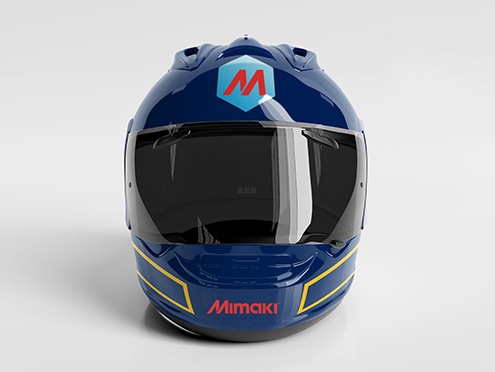
Helmet
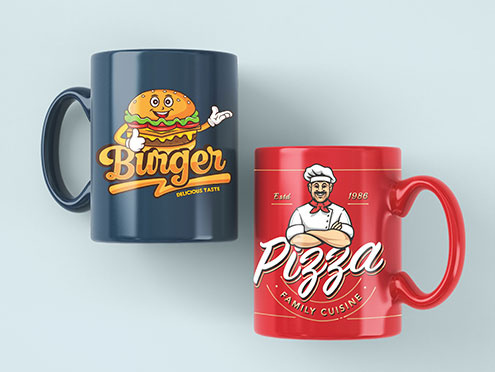
Mug

Flower pot
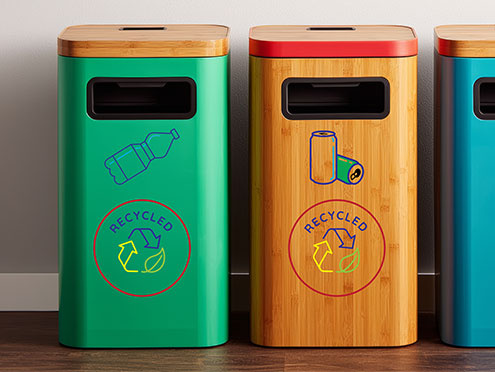
Trash can (Functional Indication)
Five Key Features Why Mimaki's "UJV300DTF-75" is Superior
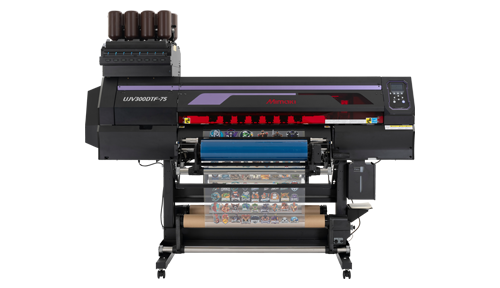
1. Top-class high-quality printing
Mimaki's waveform control technology, engineered for premium image quality, ejects ultra‑fine ink droplets with high precision and density. It reproduces beautiful, grain-free gradations and accurately prints tiny text and fine lines.
2. Production supported by trusted stability: Secure & stable film feeding system
A uniquely developed pinch‑roller system designed specifically for the UV‑DTF film ensures stable feeding. Its feeding technology handles adhesive surfaces flawlessly, allowing printing without meandering. Even thin and difficult-to-handle transfer sheets can be easily set up, making the system user-friendly for beginner operators.
3. Production supported by trusted stability: Various automatic support functions
It features automated maintenance functions such as the NCU (Nozzle Check Unit), NRS (Nozzle Recovery System), and the MCT white‑ink circulation mechanism that maintains print quality. These functions minimize the need for visual monitoring while consistently maintaining high‑quality output. Additionally, the built-in Media Jam Sensor prevents collisions between the print head and the film, reducing the risk of print head damage.
4. A combination of two newly developed eco-friendly next-generation UV inks achieves both durability and flexibility.
UJV300DTF-75 combines hard ink "ELH-100" and soft ink "ELS-170" to achieve both strength and flexibilityin decorative designs, and has achieved industry-leading durability.
The ELH-100 and ELS-170 are highly safe next-generation inks that do not contain substances that are expected to be restricted under the European SVHC regulation*1 and have also obtained GREENGUARD Gold certification*2.
*1. REACH regulation governing substances of concern, especially those that may have a significant impact on human health or the environment.
*2. GREENGUARD GOLD certification is one of the environmental certification systems operated by UL (Underwriters Laboratories) in the U.S. and is given to products with low VOC (Volatile Organic Compounds) emissions.
5. The ultimate peace of mind with Mimaki's Global Network
Sales teams and customer engineers across Mimaki Engineering's global offices and distributors provide swift support, from pre-purchase consultations to troubleshooting.
We provide an environment where all Mimaki product users can continue production activities with peace of mind.
ROI Simulation: Tumbler example
Realize significant profits with small-lot, high-value-added business.
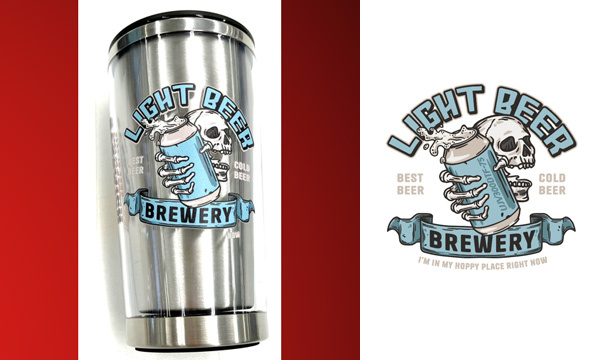
Printing conditions: 600×600 dpi 12-Pass 3-layer printing (White -> Color -> Clear Matte)
| Item | Calculated Data / Cost Breakdown |
|---|---|
| Data size (W x D) | 7.5 cm x 7 cm (3.0" x 2.8") |
| Ink consumption | 0.192 cc / piece |
| Media price | 5.8 yen / piece (1,100yen/m²) |
| Item price | 500 yen / piece (reference price) |
| Total production cost | 510.7 yen / piece |
| Estimated retail price | 2,500 yen / piece (reference price) |
| Gross Profit Per Item | 1,989.3 yen / piece |
*Note: Costs and prices are estimates based on market information and are subject to change.
Customer feedback: Expanding new business potential with UV-DTF
B&P Co., Ltd.
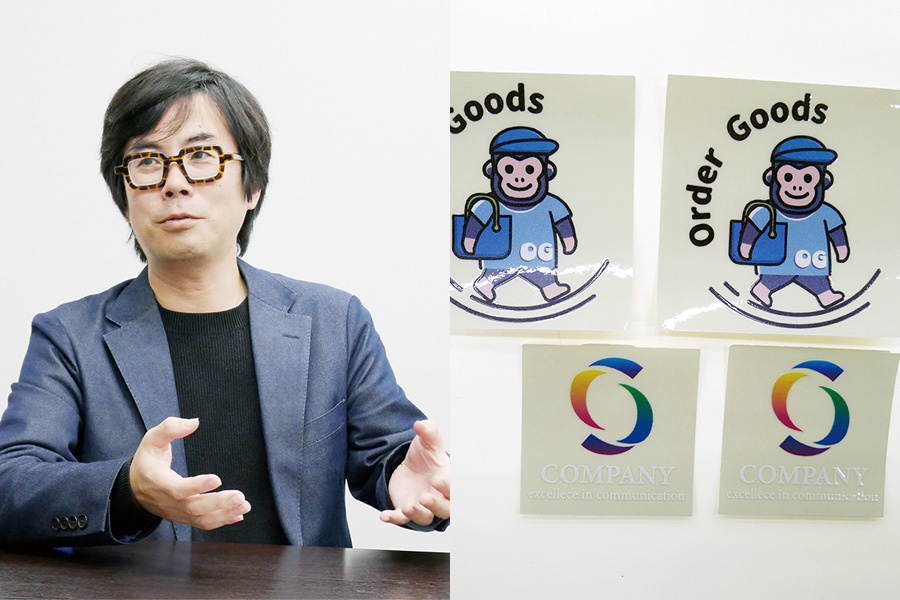
[Break through material barriers] Direct printing items you previously gave up on, from PP and mirrors to 3D objects, are transformed into high-profit products.
Decoration on special materials and 3D shapes—previously difficult with direct printing—become possible with UV‑DTF. This includes materials previously avoided, like PP (where ink adhesion remains unstable even with primer treatment) and mirrors (which risk damaging the printer head). This case study showcases how a company vastly enhanced its capabilities by venturing into a new market: the customization business for a wide variety of ready-made products.
View case details
Funamizu Hagata Seihan Co., Ltd.
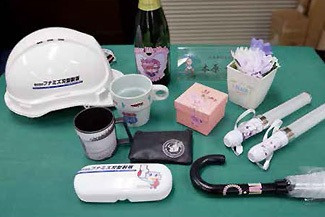
[Reliable high quality & productivity] Sharp reproduction of fine text! Exploring a new business model: "Delivering pre-printed transfer sheets."
They highly valued the automated structure that completes the whole process in a single print run, eliminating the hassle of manually attaching application sheets—unlike conventional UV-DTF printers. They also recognized its superior durability and adhesive strength compared to competing products. This case study highlights their innovative business vision of delivering printed transfer sheets directly to customers, leveraging the ease of application.
Idea Ltd.
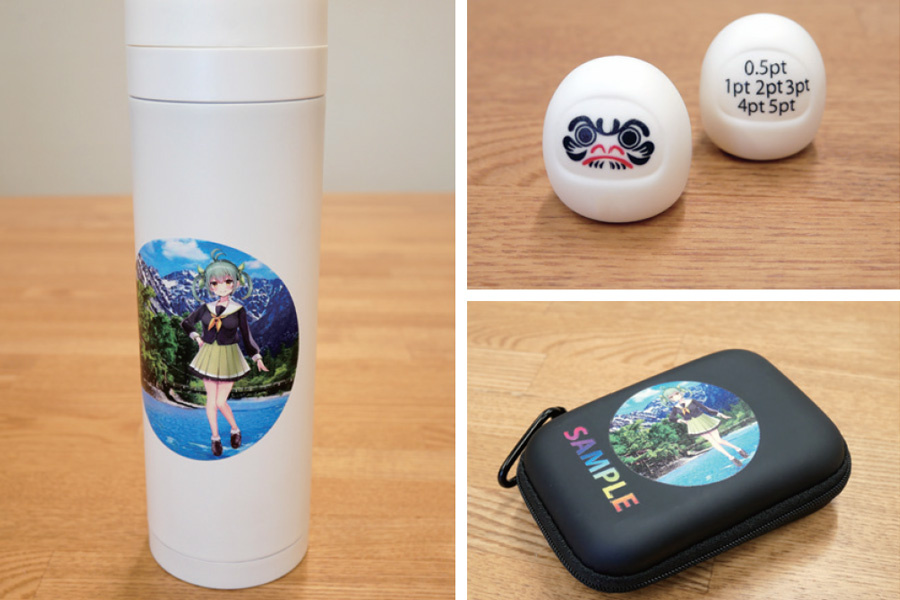
[Start printing without the base product] Streamline small-lot projects with "pre-printing and storage" even before products arrive! High scratch resistance and ease of application ensure merchandise quality.
In their core business of merchandise printing, they achieved a breakthrough process of "printing onto sheets in advance" before the base products arrive, completely eliminating constraints on storage space and delivery schedules. They plan to use this for sports team merchandise requiring individual player numbers, as well as high-mix, low-volume printing in units of 100 pieces. This case study also highlights their high praise for ease of application and exceptional abrasion resistance, ensuring durability in everyday use.
[For users of flatbed UV printers]
It's not just a "difference in method."
It delivers a dramatic "operational efficiency" that redefines setup, storage, and mass-production speed.
Three efficiency breakthroughs that overcome the limits of flatbed printers
(1) [Setup] Zero jig fabrication effort or cost! Start mass production the same day you get the data.
Outsourced jigs, which were essential for mass production on small flatbed machines, are no longer required.
With the data prepared, mass printing onto film can begin on the same day the order is received.
(2) [Process] Pre-print sheets without waiting for the products to arrive
Unlike direct printing, you can "print and stock sheets in advance" even if you don't have the base products on hand.
Once the products arrive, you simply apply the print, allowing smooth handling of rush orders or high-mix, low-volume projects without panic.
(3) [Space] No need for bulky product inventory
There is no need to let product inventory or past jigs sit in your warehouse for repeat orders.
Since you can store them as thin, printed sheets, it resolves your storage space issues all at once.
FAQ
Q: What is the biggest difference from direct printing?
A: The biggest difference is that any printing failure happens on the film, not on the actual product. Direct printing is a one-shot deal. A typo, misalignment, or ink dropout means the expensive product becomes waste. With our UV-DTF method, you can inspect the print on the film and transfer only the perfect pieces onto the product.
Q: Specifically, what kinds of products are best suited for this decoration method?
A: It is suitable for many items previously considered impossible to print on—large products or walls that cannot fit into a printer, off-the-shelf items with complex curves or height variances like helmets and game controllers, and materials like ceramics, glass, polypropylene, and polyethylene. As long as there is space to apply the film, decoration is possible anywhere.
Q: What are the strengths of Mimaki products compared to other companies' DTF printers?
A: It comes down to high image quality, stability, and our support system. The most common trouble with UV-DTF is ink clogging. Mimaki's proprietary MCT (ink circulation function), NCU (nozzle check), and NRS (nozzle recovery) minimize downtime. Additionally, prompt maintenance support through Mimaki's global network provides strong peace of mind.
Q: Will it not peel off of very complex uneven surfaces or tight curves?
A: The UJV300DTF-75 achieves industry-leading performance in both durability and flexibility by combining the rigid ink ELH-100 and the flexible ink ELS-170. Once firmly adhered, it will not easily peel off under daily use or typical usage conditions.
Q: How is the weather resistance when applied to products used outdoors?
A: The outdoor weather resistance is 4 to 8 months (equivalent to our flexible ink ELS-170), which is among the best in the industry. However, since the UJV300DTF-75 is used in combination with the rigid ink ELH-100, cracks or fractures may occur in the image after more than six months of use. *According to our internal testing.
Therefore, this product is best suited for decorating everyday items (for indoor use) requiring high abrasion resistance, as well as short‑ to mid‑term event novelties.
Q: Does it require specialized skills or advanced techniques?
A: No, it does not. The machine automatically handles everything from printing to applying the application sheet. The transfer process is simple: just cut out the printed material, apply it to the item, and peel off the application sheet. Anyone can achieve the same quality from the very day it is installed.
Contact Us
For documents requests, quotations, sample inquiries, or any other questions and requests regarding the UJV300DTF-75, please feel free to contact us below.
